
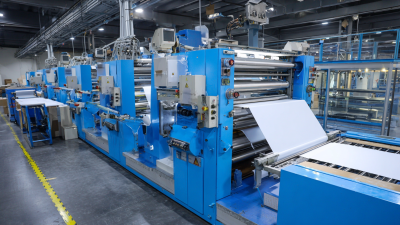
You know, in today’s fast-moving business scene, efficiency really isn’t optional anymore. That’s where the Automatic Die Cutter comes in—it’s kind of a game-changer for a lot of companies. This machine is pretty impressive, offering both precision and speed, and it’s setting a whole new standard for cutting and shaping all kinds of materials. The cool part? It can handle a variety of materials, so whether you’re working on packaging, custom designs, or other projects, it’s pretty versatile.
Take ABC Packaging, for example—they’ve seen some pretty remarkable improvements since they started using it. Not only does it cut down on waste—which obviously saves money—but it also helps streamline their whole process. That said, it’s not just a plug-and-play deal; you really need some training and understanding to get the most out of it. Unfortunately, not everyone’s fully up to speed on its potential yet. Finding that sweet spot between relying on automation and keeping that human touch—well, that’s still a bit of an ongoing challenge.
Investing in new tech is never simple, right? Companies have to carefully weigh the costs against the potential savings and gains. Sure, an Automatic Die Cutter can make everything run smoother and faster, but it also needs proper planning and execution. I’ve noticed quite a few businesses still wondering if they really need it or not. But, honestly, once you understand its capabilities, it can really open up doors for growth and innovation—that’s the real value it brings.

Benefits of Increased Production Efficiency with Automatic Die Cutters
Automatic die cutters have transformed production efficiency in many businesses. These machines streamline the cutting process, allowing for quicker turnaround times. By automating this task, companies minimize manual labor and reduce errors. As a result, there’s a notable increase in productivity.
The capacity for faster production rates is evident. An automatic die cutter can handle multiple layers of material at once. This feature cuts down on the time needed for complex projects. Yet, it's not always perfect. Sometimes, the machine may encounter misalignment or material jamming issues. Regular maintenance is essential to keep the operation smooth.
Moreover, consistency in cutting quality is a significant advantage. Once set, automatic die cutters deliver repeatable results. This leads to uniform products, which are critical for branding and customer satisfaction. It’s important to note, however, that initial setup and calibration can be time-consuming. Businesses must invest time to understand their specific needs and machine capabilities.


Transforming the Packaging Industry: Insights from Market Reports on the Impact of GUOWANG C80Q Automatic Die-Cutter with Stripping
The packaging industry is undergoing a significant transformation, marked by advancements in technology that enhance efficiency and precision. One such innovation is the automatic die-cutter with stripping capabilities, which revolutionizes the way materials are processed and handled. This technology not only streamlines the cutting and stripping processes but also addresses challenges such as speed and accuracy in production, ultimately leading to a more streamlined workflow.
A critical component of this innovation is the high-quality feeder system designed to enhance paper handling. Featuring four suckers for lifting paper and an additional four for forwarding, this system ensures stable and rapid feeding, which is essential for maintaining productivity on the production line. The ability to easily adjust the height and angle of the suckers allows for precise alignment of sheets, contributing to a flawless output. Complemented by a mechanical double-sheet detector, a sheet-retarding device, and an adjustable air blower, the feeder guarantees that sheets transition smoothly to the belt table, minimizing the risk of jams or misalignment during operation.
Furthermore, the incorporation of a reliable vacuum pump from a distinguished manufacturer ensures optimal performance in maintaining the necessary suction power throughout the process. This technological enhancement not only elevates the quality of the packaging production but also supports the industry's shift toward automation, allowing businesses to meet the increasing demands for efficiency and precision in their operations.

FAQS
: The article aims to provide insights on a specific topic. It encourages readers to think critically about certain issues.
You can implement the suggestions in your daily life. Consider experimenting with different approaches mentioned.
Yes, some suggestions may not work for everyone. It's important to reflect on what suits your situation best.
Disagreement can lead to deeper understanding. It's beneficial to analyze why you feel differently.
Begin by researching basic concepts. Dive into related materials to gather a broader perspective.
The content is intended for anyone curious about the topic. However, some may find it less relevant.
Yes, sharing can help spark discussions. Make sure your friends are interested in the subject.
Take your time to reread sections. Jot down questions for further clarification or discussion.
Revisiting concepts can be beneficial. Regular reflection may help you grasp the nuances better.
Yes, seek out books, podcasts, or articles related to this topic. They can provide further insights.
Conclusion
The use of an Automatic Die Cutter presents numerous advantages for businesses aiming to enhance their operational efficiency. Firstly, these machines significantly increase production efficiency by enabling faster cutting processes, while also reducing material waste through precision cutting techniques. This precision not only conserves resources but also allows for enhanced design flexibility and customization options, meeting diverse customer needs more effectively.
Moreover, businesses can achieve substantial cost savings over time by transitioning from manual die cutting to automation. Automatic Die Cutters provide boosted accuracy and consistency in cutting, minimizing errors and rework. Additionally, they improve worker safety and ergonomics, as automated systems reduce the physical strain on employees. Finally, these systems can be seamlessly integrated into workflows alongside other automated equipment, creating a streamlined production line that enhances overall productivity.
Related Posts
-

What Makes a Cut Die Cutter Essential for Your Business
-

How to Choose the Best Die Cutter for Paper Crafting?
-

How to Maximize Your Projects with Magnet Sticking Techniques
-
Cardboard Laminators: A Comprehensive Comparison of Top Models for Global Buyers
-

Top Digital Cutter Machines to Boost Your Printing Business Efficiency
-

2026 Best Digital Cutter Machine Reviews and Buying Guide?
