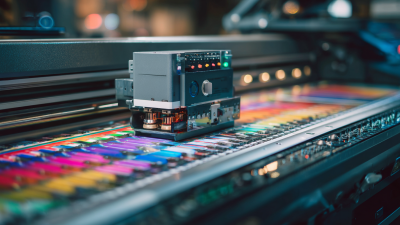
You know, when it comes to the printing world, the Offset Press Machine is kind of a big deal. It’s really shaped how things get printed on a large scale, like, it’s pretty much the backbone of modern print production. I remember John Smith from PrintTech Solutions once saying, “Offset printing is the backbone of modern print production,” and honestly, that stuck with me. It just shows how important this machine really is.
So, here’s how it works: the machine uses this pretty clever process where ink gets transferred from a plate onto a rubber blanket, and then that blanket applies the ink onto the paper or whatever surface you’re printing on. It’s the reason why images and text turn out so sharp and clear. But, it’s not like you can just set it and forget it — operators need to keep an eye on it, check the settings, make sure the ink levels are right. If they slack off, quality drops pretty quick.
Now, don’t get me wrong — the machine is super effective, but there are definitely some hurdles. Setting it up can take a while, especially when you’re starting out. Plus, different materials might need tweaks here and there, which can be pretty annoying if you’re new to all this. Still, despite these little headaches, the Offset Press Machine is pretty much king when you look at its efficiency and the quality of prints you get. Honestly, if you want to make it in the printing business, understanding this machine is pretty much essential.
An offset press machine is a vital tool in the printing industry. It uses a unique technique where the inked image is transferred from a plate to a rubber blanket, then to the printing surface. This method ensures high-quality prints with consistent color reproduction. According to industry reports, offset printing accounts for approximately 40% of all printed materials globally.
The process begins with the creation of printing plates, often made from aluminum. This is followed by inking, where rollers distribute the ink evenly. The machine then passes through a series of rollers that apply the ink to the substrate, which could range from paper to cardboard. Offset presses can handle large volumes efficiently, making them ideal for commercial printing.
Tips for optimization: Regular maintenance of the offset press can extend its life. Cleaning the rollers is essential to achieve vibrant colors. Ensure the ink is compatible with the paper type for best results. Remember, minor adjustments in settings can lead to significant differences in print quality. Always conduct test prints before large runs to avoid costly errors.
Offset printing has a fascinating history that traces back to the early 20th century. Originally invented in 1904 for printing on metal, the technology evolved dramatically. By the 1950s, it gained popularity for paper printing. Data from industry reports show that over 40% of all printed materials today are produced using offset technology. The rise of this method is due to its efficiency and cost-effectiveness. Large print runs become economical, making it the choice for newspapers, brochures, and books.
As printing technology progressed, so did offset presses. The introduction of automated systems in the 1980s revolutionized production speeds. A significant milestone was the development of computer-to-plate technology in the 1990s. This innovation reduced the need for film, enhancing image quality. Reports suggest that digital and offset printing may coexist, each serving different market needs. Despite advancements, some challenges remain. Maintaining color accuracy and managing waste during production are areas for improvement. The ongoing evolution of offset presses highlights both achievements and points of reflection within the industry.
Offset press machines are essential in the printing industry. Their efficiency heavily relies on key components, each serving a specific function. The most critical part is the plate cylinder. It transfers the image from the plate to the blanket. The blanket cylinder then transfers the inked image onto the substrate. This process ensures high-quality prints with sharp details.
Another vital component is the inking system. It controls the distribution of ink to the plate cylinder. An uneven ink supply can lead to poor quality prints. Regular maintenance can help prevent these issues. The delivery system also plays a crucial role. It ensures that printed sheets are stacked accurately and without damage.
**Tips:** Always check the rollers for wear. This can save you from costly repairs down the line. Consider investing time in staff training on equipment use. Properly trained employees will reduce errors and improve print quality.
Monitoring the temperature and humidity in the printing environment is crucial. These factors can affect ink drying times and overall quality. Keeping the workspace organized and well-maintained can minimize operational hiccups. An inefficient setup can lead to delays and increased costs.
Offset printing is a widely used technique in the printing industry. It involves transferring ink from a plate to a rubber blanket and then onto the printing surface. This process allows for high-quality images and text. According to a 2022 industry report, offset printing accounts for over 40% of global printing output. It remains popular for its efficiency and versatility, especially for large print runs.
In the offset printing process, plates are created for each color used, typically CMYK. Each plate corresponds to one color. The inks are applied to the plates, which then transfer the image to a rubber blanket. This blanket ensures that the ink is evenly distributed on various surfaces, from paper to cardboard. Reports indicate that variations exist in ink types and drying times, affecting the final product.
However, the process is not without challenges. The setup can be time-consuming, especially for short runs. Many printers find that adjustments are needed for different materials, leading to waste. In fact, studies show that about 15% of materials are often wasted during setup. Despite these issues, offset printing is an essential method in the industry, delivering consistently high-quality results.
| Feature | Description |
|---|---|
| Printing Technique | Offset lithography is a widely used printing technique that employs a flat surface and relies on the repulsion of oil and water. |
| Components | Includes a plate cylinder, blanket cylinder, and impression cylinder for transferring the print onto the substrate. |
| Process Steps | 1. Image Creation 2. Plate Preparation 3. Ink and Water Application 4. Transfer from Plate to Blanket 5. Final Transfer to Paper |
| Advantages | High quality prints, great for large volumes, and cost-effective for mass production. |
| Common Uses | Used for printing books, magazines, newspapers, and packaging materials. |
Offset printing offers several advantages that make it a popular choice for many projects. It delivers high-quality prints with sharp images and vibrant colors. This method is especially suitable for large-volume printing, where cost efficiency becomes essential. The technique utilizes a rubber blanket to transfer ink onto the substrate, which ensures even distribution and clarity.
One significant benefit is its ability to handle various paper types and sizes. Whether for brochures or business cards, offset printing can accommodate different formats with ease. The consistent quality maintained over large runs makes it ideal for promotional materials. However, the initial setup can be time-consuming and costly, which might not suit small-scale jobs.
Tips for choosing offset printing include considering your project's size and budget. If you have a large volume, offset is usually more economical. Always request samples to assess quality before committing. Additionally, think about the paper type—some stocks may yield better results than others, reflecting on your final product. Be mindful of your timeline; offset printing is less suited for urgent needs. Understanding these nuances can help you make informed decisions for your printing projects.
Offset press machines are widely used across various industries. Their ability to produce high-quality prints makes them a popular choice. You can find these machines in packaging, publishing, and advertising sectors. They excel in mass production, providing cost-effective solutions for large print runs.
In packaging, offset printing is essential. Brands rely on it for labels, boxes, and bags. The machine ensures vivid colors and sharp images, making products appealing. In publishing, books and magazines benefit from the efficiency of offset presses. They can print thousands of copies quickly, saving time and resources.
Tip: Always evaluate your print volume before choosing the method. It helps in maximizing efficiency.
Advertising agencies also utilize offset presses for brochures and flyers. The high-quality output is perfect for attracting customer attention. These agencies need consistency and clarity in their prints, which offset machines provide. However, sometimes, an unexpected flaw may occur. It’s important to review each batch before distribution.
Tip: Keep a close eye on color matching. This can be challenging with large volumes.
Offset printing is not without its challenges. A wrong setup can lead to waste and frustration. Regular maintenance of the machines is crucial to prevent issues. Small mistakes can escalate into bigger problems if left unchecked. Remember, every detail counts in the final product.
Offset printing technology has evolved significantly over the years. Today, it remains a dominant force in the printing industry. Understanding market trends is crucial for businesses involved in this sector. Sustainable practices are gaining traction. Many companies now focus on eco-friendly materials and processes. This shift reflects growing environmental awareness among consumers and businesses alike.
The future of offset printing looks promising, yet there are challenges to address. Digital technology continues to rise, often perceived as faster and more versatile. Offset printing, however, offers high-quality results that digital methods sometimes struggle to match. As demand for customization rises, offset printers may need to adapt. Innovative techniques and technologies will be essential to stay relevant.
Moreover, automation is changing the landscape. With advancements, machines can now operate with minimal human intervention. While this boosts efficiency, it raises questions about job security in the industry. Balancing technology with the need for skilled labor will require careful consideration. The offset printing market must reflect on these dynamics for future growth.
In the fast-paced world of manufacturing, efficiency is paramount. The KMD 360T Folding Machine exemplifies innovation in design, catering to various applications ranging from packaging to industrial production. This versatile machine can accommodate dimensions from a minimum size of 50x60mm to a maximum size of 360x750mm, making it an adaptable solution for a wide range of projects. The ability to fold materials of varying sizes ensures that businesses can optimize their production processes without the need for multiple devices.
The KMD 360T stands out with its impressive folding knife cycle rate of 200 times per minute. This high-speed operation not only boosts productivity but also helps meet the growing demands for quick turnarounds in production. According to industry reports, automation and advanced machinery can increase output by nearly 30%, reinforcing the need for sophisticated technology in modern manufacturing. By reducing manual labor and enhancing precision, machines like the KMD 360T significantly contribute to operational efficiency.
Moreover, the applications of the KMD 360T extend beyond traditional uses; it can serve diverse sectors including textiles, electronics, and packaging. The integration of such machinery aligns with the industry's shift towards smart manufacturing, where adaptability and speed are critical. As businesses continue to seek innovative solutions, the implementation of advanced folding technologies like the KMD 360T can provide a competitive edge by ensuring unmatched efficiency and versatility in a rapidly evolving marketplace.
: Offset printing started in 1904 for metal, later becoming popular for paper by the 1950s.
It is cost-effective and efficient for large print runs, making it ideal for newspapers and brochures.
The introduction of automated systems and computer-to-plate technology has enhanced production speeds and image quality.
It provides high-quality prints with sharp images, vibrant colors, and accommodates various paper types and sizes.
Color accuracy and waste management remain areas for improvement despite technological advancements in the field.
Yes, the setup can be costly and time-consuming, which may not be ideal for small-scale projects.
Request samples to see what reflects best on your final product, as some stocks yield better results.
No, offset printing is generally less suited for urgent needs due to longer setup and production times.
Eco-friendly materials and processes are becoming more important due to rising environmental awareness.
Automation boosts efficiency but raises questions about the future of skilled labor in printing.
An Offset Press Machine is a widely-used printing device that utilizes a lithographic process to transfer ink from a plate to a rubber blanket and then onto the printing surface. This technology has evolved significantly since its inception, allowing for high-quality print production at large volumes. Key components include the plate cylinder, blanket cylinder, and impression cylinder, which work in synergy to achieve precise and consistent output.
The printing process involves several essential steps, including plate-making, inking, and printing, making it efficient for various media applications. Offset printing is favored for its superior image quality, cost-effectiveness for longer runs, and versatility in handling different substrates. Its wide-ranging applications span industries from publishing to packaging, adapting to market trends and technological advancements, ensuring the Offset Press Machine remains a vital component in modern printing solutions.