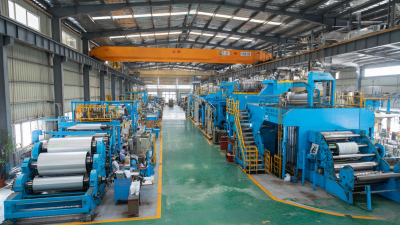
In today’s super busy world, staying efficient is a must for any business out there. An Automatic Baler can really give your productivity a boost—think of it as a game changer. With mounting pressure to handle waste properly, having a machine like this can make your waste management process way easier and more practical.
These balers cut down on labor costs and save you a bunch of time. They do a great job at compacting different kinds of materials, which honestly makes recycling a whole lot simpler. Just picture a bustling facility where your team can concentrate on their main tasks instead of wasting time manually baling stuff. That said, not every business might be getting the most out of these machines, and missing out on the benefits isn’t ideal. Making the leap to invest in an Automatic Baler is a decision that’s worth thinking about carefully.
Of course, it’s not just about the benefits. Businesses need to really consider their specific needs, because this kind of equipment isn’t a perfect fit for everyone. Some teams might find it tricky to fit this into what they already do. So, understanding your unique challenges is key if you want to get the most out of an Automatic Baler.
An automatic baler is a machine designed to compress waste materials into bundles. This process helps in efficient storage and transportation. It uses hydraulic systems to press materials tightly. The result is a compact package that takes up less space. Many industries benefit from this technology.
The operation of an automatic baler is quite straightforward. Materials are loaded into the chamber. Sensors detect when the chamber is full. The machine then presses the materials together and binds them, often using twine or wire. This method minimizes labor costs and increases efficiency.
However, there are some drawbacks. Maintenance can be challenging. A malfunction can halt operations and create a backlog. Proper training is essential for operators to avoid mishaps. Employees must understand how to handle the machine safely to prevent accidents. Some industries might find it difficult to justify the investment initially, despite its long-term benefits.
Automatic balers offer significant advantages in waste management. They streamline the recycling process, making it more efficient. By compressing waste materials into compact bales, they save space. This compacting reduces the volume of waste significantly, which is great for facilities with limited storage.
Operational efficiency improves with an automatic baler. Manual labor is minimized, allowing workers to focus on other tasks. Automatic systems require less supervision and can run continuously, producing consistent results. However, maintenance is essential. Neglecting it can lead to breakdowns, disrupting workflows.
Cost savings are another benefit. Reduced labor and transportation costs are notable. When waste is compacted, fewer trips to disposal sites are needed. The initial investment might seem high, but the long-term gains often justify it. Still, it’s vital to assess the specific needs of your operation. Investing in an automatic baler isn't a one-size-fits-all solution. Individual facilities may experience different outcomes.
Automatic balers can significantly reduce costs for businesses. They streamline the process of packaging waste materials. According to a report from the Institute of Scrap Recycling Industries, efficient baling can save companies up to 50% on disposal costs. This is due to the reduced volume of materials needing transportation.
Energy consumption is another area of savings. A survey by the Department of Energy found that automatic balers consume up to 30% less energy compared to manual systems. Despite initial costs, the long-term benefits are compelling. Labor hours decrease, allowing staff to focus on other tasks. Many facilities report improved workflow and increased productivity.
However, it’s essential to reflect on the installation and maintenance challenges. Downtime can occur if routine maintenance is overlooked. Some operators may struggle with the technology. Training staff is crucial. Investing in this knowledge ensures maximum efficiency and minimal operational disruptions. Companies must continually assess the balance between upfront costs and the efficiency gains.
Automatic balers play a significant role in enhancing recycling rates across various industries. By compacting recyclable materials, they streamline operations and maximize space efficiency. According to a report from the EPA, using balers can increase material recovery rates by up to 30%. This improvement is crucial in today's context of growing waste management challenges.
The efficiency of balers also allows facilities to handle larger volumes of waste. When waste is compacted into bales, it occupies less space. This space-saving aspect can lead to savings in transportation costs, as more material can fit into a single load. Yet, many facilities still underutilize balers, which can lead to a missed opportunity for improved recycling rates. A recent survey indicated that nearly 40% of businesses do not use balers despite having significant recyclable waste.
However, relying solely on balers may not be the complete solution. Effective recycling also depends on employee training and the overall waste management strategy. A study from the Recycling Partnership found that improper sorting can lead to contamination of recycled materials, undermining the benefits of baling. Thus, while balers contribute to higher recovery rates, they should be part of a broader, well-rounded recycling initiative.
| Material Type | Recycling Rate (%) | Recovery Improvement (%) | Reduction in Landfill Volume (%) |
|---|---|---|---|
| Cardboard | 85 | 30 | 50 |
| Plastic | 60 | 25 | 40 |
| Metal | 90 | 35 | 60 |
| Glass | 75 | 20 | 30 |
| Paper | 80 | 28 | 45 |
Automated systems, like automatic balers, significantly enhance operational efficiency. According to industry reports, automating baling processes can reduce labor costs by up to 50%. This is a game changer for warehouses and recycling centers. With less manual input, workers can focus on more crucial tasks.
Time savings are substantial. Automating the baling process can increase throughput by as much as 30%. This means less downtime and faster operations. Companies no longer waste hours on manual baling. Instead, they can process more materials efficiently. However, initial setup costs may raise concerns for some businesses. It is essential to analyze long-term benefits versus upfront investments.
Operational errors tend to decline with automation. Manual processes often lead to inconsistencies, which can slow down production. Automated systems produce uniform bales, reducing the chance of human error. Yet, there can be issues with machine breakdowns. Regular maintenance is key, raising questions about downtime and repair expenses. Balancing automation and human oversight is crucial in this evolving industry.
Automatic balers play a vital role in environmental sustainability. By compacting recyclable materials, they significantly reduce the volume of waste. This leads to fewer transportation needs, which cuts down on fuel consumption. With less carbon dioxide released into the atmosphere, businesses contribute to a healthier planet.
The process isn’t perfect. Some facilities may struggle with contamination in their recycling streams. This can diminish the effectiveness of balers in reducing the overall carbon footprint. Moreover, improper maintenance can lead to machinery downtime. Regular checks are crucial for maximizing their efficiency.
Despite these challenges, the benefits are clear. Automatic balers are an essential tool for optimizing waste management. They allow organizations to handle materials more efficiently, promoting recycling efforts. This not only helps to reduce landfill waste but also fosters a culture of sustainability. Each step taken counts toward a greener future.
The adoption of automatic balers is on the rise across various industries. Businesses are recognizing their value in streamlining waste management. Automatic balers enhance efficiency by compacting recyclables into manageable bales. This process reduces storage space and simplifies transport. Many companies are seeking ways to be more environmentally friendly. This shift aligns with sustainability goals that many organizations now prioritize.
Manufacturers, retailers, and farms are leading the charge. They turn to these machines for improved waste handling. However, not all companies maximize their potential. Some installations face challenges like improper loading techniques. There can be a learning curve, and not everyone adapts quickly. Companies still require employee training to ensure efficient operation.
The trend is shifting, but it’s not flawless. Some industries may underestimate their need for automatic balers. It often leads to mishaps, such as equipment breakdowns due to neglect. Balers can improve sustainability, yet they need regular maintenance. There’s potential for progress, but caution is necessary. Every sector has unique requirements and must find balance in adopting new technology.
In the realm of waste management, operational productivity hinges on the equipment employed. The horizontal semi-automatic baler, specifically designed to handle substantial workloads, plays a crucial role in streamlining the baling process. With a hydraulic power of 60 tons, this baler promises efficiency and reliability, allowing facilities to process waste material with significant ease. The system is engineered to produce bales measuring 750*850*(300-1100)mm, catering to various waste types and ensuring optimal density for transport and storage.
The baler's feed opening size of 1200*750mm ensures quick and effective loading of waste, maximizing throughput. Capable of producing 3 to 5 bales per hour, it enhances operational efficiency while contributing to labor cost reductions. Moreover, each bale, weighing between 200 to 500kg, is designed to be compact and manageable, which further optimizes handling and reduces disposal costs. By effectively integrating this equipment into waste management processes, organizations can significantly improve their productivity and achieve substantial cost savings in waste handling and recycling operations.
: The product enhances daily routines. It offers convenience and efficiency for users.
The product uses simple mechanics. Users engage with it easily. It’s straightforward and intuitive.
Yes, it is designed for various users. However, some may find it challenging. Adjustments may be needed.
Some users report minor discomfort. Always consult a professional if issues arise. Reflect on personal reactions.
Regular cleaning is recommended. This ensures optimal performance. Neglect can lead to issues later.
Try troubleshooting steps first. If unresolved, seek customer support. Patience can lead to better understanding.
Yes, there is a return policy. Check specific conditions. Not all returns are straightforward.
Results may vary per individual. It takes time and consistency. Reflect on personal progress regularly.
Compatibility is not guaranteed. Some pairings may not work well together. Experimentation can help find solutions.
Generally, the product is suitable for all ages. However, younger users may need supervision. Be mindful of specific needs.
An Automatic Baler is a powerful machine designed to compact waste materials into bales for efficient storage and transport. Its automated processes enhance waste management by streamlining operations and significantly reducing the need for manual labor. Among the key advantages of using an Automatic Baler are improved cost savings through operational efficiency, increased recycling rates due to better material recovery, and significant time savings as automated systems accelerate the baling process.
Moreover, Automatic Balers contribute to environmental sustainability by minimizing the carbon footprint associated with waste handling. As industries across various sectors increasingly adopt this technology, the trend underlines the growing recognition of the benefits that Automatic Balers offer in optimizing waste management processes and promoting recycling efforts.